Where's Home?

http://www.wetcircuit.com/wp-content/myfotos/wizard_of_oz/Wizard_of_Oz_00.jpgRushdie, in his analysis of "The Wizard of Oz" understands that home is where the heart is. He grew up in England but felt connections to his birthplace of India. He explains that the weakness of adults force children to decide their own destiny. This is explained fully in "The Wizard of Oz"critique.
Rushdie explains that the "The Wizard of Oz" never made money until it was popularized via the television. This idea transcends Hollywood and later Bollywood in India.

The world of The Wizard of Oz has possessed" thinking within us. "We are the stand-ins now.” In the typewrites clip we are completely immersed as viewers and for me it makes me feel comfort. 


Rushdie promotes the idea of fantasy with the viewer leading the way. As a viewer, Rushdie states that we must ulitmately decide where "home" is. The fantastical notion that home can be somewhere within a film makes us as the audience want a better life and home. The desire to find ones own and identify within a people remain most imperial when analyzing any text.


Posted at at 5:07 PM on Tuesday by Posted by Lorenzo | 0 comments   | Filed under:

Jack Bauer

http://images.fanpop.com/images/image_uploads/Jack-Bauer-24-36840_1280_960.jpg
Jack Bauerr is the epitome of a dad who obsessed with struggle. Although his role as father is seen a progressive stage in society, his failure to care for his work and family in unison falter. Jack Bauer is man of more than his work-- or so he claims.

Using ideas of Freud, we see how the unconscious of Jack's fears are seen in the treatment of his family. He loves his work as much as one should another human and thus subconsciously hates the world in which he is a part of at home--a father.

Jack then acts aggressive and masculine to counteract his unconscious effeminate want for a family he can love. Jack Bauer is the powerful male character of his biggest dreams.

Posted at at 4:37 PM on by Posted by Lorenzo | 0 comments   | Filed under:

Jameson

Leonardo da Vinci's Mona Lisa painting has taken different form much throughout recorded history. A lady is a lady is a lady. No matter how many takes there are on the da Vinci classic, it will always remain to the viewer the Mona Lisa.

I feel that in order for any painting or work of art to have legitimacy, it must be first well revered in the context in which it was painted. In other words, it must have meaning to be loved. The Mona Lisa strikes me as a loved piece. Artists who feel the need to recreate it inherently have a love of the piece.

This is postmodernism. The trends or movements in art that react or reject the dogma, principles, and practices of established modernism. In light of recreating the Mona Lisa, da vinci's international style and encouraging use of elements from his preffered styles often play with complexity and can be seen in recreation.

Jameson would dub the photo to the left a challenge to"meta-narrative"-an abstract idea thought to be a comprehensive explanation of historical experience or knowledge. This is good for society and drives artists to question ubiquitous norms.


Posted at at 4:24 PM on by Posted by Lorenzo | 0 comments   | Filed under:

The Public Sphere

The relationship between public and private is progressive and complex. Habermas states in Structural Transformation general themes of public vs. private in relation to politics that can be seen in any given society throughout the world.  His overall vision is surmised in a general overview of what constitutes a public sphere. The question to then be asked is how does DailyKos.com apply to Habermas' ideals and does the site truly exhibit a public sphere?

A public sphere should not be curtailed to support any bias.  DailyKos.com is subjective and distinctly promotes a leftist point of view explicity on its home page. The website compiles several different opinions that appear to be a news feed interspersed with (opininated) commentary from select authors. Alterations to the site can only be made by an administrator or power user and not the general internet using public. The site opens up at times to allows comments on live feeds where internet users can voice their opinion. These various restrictions destroy the basis of Habermas' ideals for a public sphere. Yes, the public has a chance to comment on feeds, but interaction between people in a public setting are the basis, according to Habermas, and the internet shatters this personal interaction entirely. 

If we were to modernize Habermas' words then yes, Dailykos.com is a public sphere in the senese of the internet reaching the masses with the ability to voice their private opinions in a public setting (the internet). But the fact of the matter is that Dailykos.com objectifies what the general public can comment on, limiting opinions and molding them for the best interest of the site. Dailykos.com is a public sphere solely for the fact that it resides on the internet. People are not able to bring about issues without restriction from web administrators etc. thus making Dailykos.com a public sphere that is monitored and moderated to catered interest.

Posted at at 1:48 PM on Sunday by Posted by Lorenzo | 0 comments   | Filed under:

The Soprano's

Roland Barthes explains in Rhetoric of the Image how to interpret signs, symbols, and collective representations of life giving inanimate objects (such as this ad) higher value. As Barthes explains, an image immediately yields a first message whose substance is linguistic showing that pictures can say a thousand words just by seeing it (Barthes 270). What then do we see in the Soprano's ad? My eye sees a dark character in the man standing in the foreground on what is assumed to be a boat on water. He stands directly in front of a staple so unanimous with America and freedom, the Statue of Liberty. An image in any case helps to establish tone and feeling, and for the Soprano's this could not be more fitting-- a man in front of America, symbolizing power over America's rules and ways of thinking (a mob family with their own set rules).

The text in a scene on the other hand, as Barthes indicates sets common ground for us as viewers to interpret deeper meaning behind the photo itself. The words on the top of the Soprano's ad The final episodes, made in America identify purely and simply the elements of plot in the Soprano's (Barthes 274). Yes the final episodes were made in America by a Hollywood studio but looking deeper we find that the final episodes showcase the end of an era of the mob's reign over America.

Connecting the picture to the words is a crucial step in Barthes mind that lets us as the audience understand the complete whole of the image. By viewing the photo's Connotator's or signifier's any viewer is able to view parts of the whole image without exhaust[ing] the creator's true vision to create a seperate idea of their own (Barthes 274). Each person's interpretation will be different based on their moral views and background as stated in Film Art. This is why understanding that components of both the photo and words in combination give every viewer a unique interpretation that is neither right nor wrong when rationalized and validated.


Posted at at 3:35 PM on by Posted by Lorenzo | 0 comments   | Filed under:

Blair Witch Project

The Blair Witch Project -- a gem that both terrified and intrigued me.

When Blair Witch Project was released I was under the impression that the film was an actual documentary of one groups struggle to hunt a Blair Witch in the middle of the woods. As German cultural critic Walter Benjamin explains in The Work of Art in the Age of Mechanical Reproduction, the 'aura' of a film is its ability to create a sense of awe experienced in presenting such a unique work of art (in this case, the Blair Witch Project's effect on the audience).

“...for the first time – and this is the effect of the film – man has to operate with his whole living person, yet forgoing its aura. For aura is tied to his presence; there can be no replica of it. The aura which, on the stage, emanates from Macbeth, cannot be separated for the spectators from that of the actor. However, the singularity of the shot in the studio is that the camera is substituted for the public. Consequently, the aura that envelops the actor vanishes, and with it the aura of the figure he portrays.”

Blair Witch Project mystified audiences upon release because it was never revealed whether or not it was an actual documentary. It took American audiences on a roller coaster not knowing what was around the next corner --  The film is a more assertive attempt to cutting into reality and shows that if an audience is left to believe something is true not knowing the pretense, they will believe the director's vision and realism the film portrays.

“Magician and surgeon compare to painter and cameraman. The painter maintains in his work a natural distance from reality, the cameraman penetrates deeply into its web. There is a tremendous difference between the pictures they obtain. That of the painter is a total one, that of the cameraman consists of multiple fragments which are assembled under a new law. Thus, for contemporary man the representation of reality by the film is incomparably more significant than that of the painter, since it offers, precisely because of the thoroughgoing permeation of reality with mechanical equipment, an aspect of reality which is free of all equipment. And that is what one is entitled to ask from a work of art."

Posted at at 3:34 PM on by Posted by Lorenzo | 0 comments   | Filed under:

Tokyo vs. Hollywood


Yasujiro Ozu's Tokyo Story optimizes calm film grinding against the set grain of cliche Hollywood cinema. In general, I found the overall tone of the film tame. However, there were moments of genius aesthetic where the film challenged the standards of conventional Hollywood-- for that I'm not ashamed to say I enjoyed it. Tokyo Story vs. Hollywood Continuity... where's the realism?

Realism, in terms of cinema, is an extremely useful concept to asking questions and gaining insight to the world we live in. As Werner Herzog declared, realism is "the so called Cinéma Vérité iśrité?" With realism, we determine whether or not the characters, picture and story coincide with our said "reality". Ozu clearly breaks conventions of Hollywood by placing the camera low and breaking the 180 degree rule. Good or bad we must understand how Tokyo Story is similar and different than the mold Hollywood has set.

I, as well as most of my American friends, are used to the idea that a film should have much action and intensity to keep any viewer's attention. This is what Hollywood is about. In most Hollywood continuity films the main character encounters a problem and subsequently spends the entirety of the film searching to resolve the problem. Realism is seen in the believability of the plot to the characters and events. Hollywood is formulaic and predicted. The ideas stem from a select group of highly important individuals who feel they give American film goers what they want rather than what they need. In my mind Ozu is genius and progressive in thinking, challenging such ubiquitous norms set forth by studio executives in Hollywood.

Ozu's creation of realism differs from Hollywood by completely immersing the viewer in Japanese culture. A culture that takes on a more relaxed, slower pace, emphasizing family values and relationships. This is best seen in the camera's mechanical reproduction of reality throughout Tokyo Story. Shots that are stationary and scenes that do not completely reveal the characters encounters, leaves the viewer to fill in the pieces themselves. An average American viewer may be left puzzled but the avant-garde thinkers are inspired. Ozu's vision is uplifting and shows that a film does not have to abide by conventional standards to be well reviewed. Tokyo Story has seen the top ten list of Sight and Sound magazine twice and in essence, going back to the roots of what true film making and storytelling is. As artists we must embody the ideas of Ozu and challenge norms we know in life to get the result and ultimate impact we want to see.

Posted at at 7:37 AM on by Posted by Lorenzo | 0 comments   | Filed under:

Film Art vs. Practices of Looking

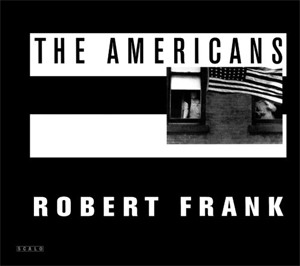
This beautiful moment in time shown in the photo above was featured in Robert Frank's book The Americans (A collection of 83 photos that showcase both the positive and negative outlooks on the American way of life). Frank tackles issues pertaining particularly to class and racial struggles throughout the 1950s.


The contrasting photo of a black woman holding a white baby in a pre-civil rights America leaves the viewer thinking. A viewer's translation of the photo can be validated only after applying both the ideas of Sturken and Cartwright in Practices of Looking and Bordwell and Thompson in Film Art.


Practices of Looking explains that the viewer has the right to interpret any artwork with personal opinion, preference and viewpoint. Sturken and Cartwright believe this to be true because every person goes through different experiences throughout their life which gives them a unique viewpoint, separate and distinct from everyone else. In looking at this photo through the lens of Sturken and Cartwright, I see a white baby cradled in the arms of his/her caretaker (a black woman). The caretaker appears to be waiting for the mother of the child and strikes me as an extremely comforting "nanny" figure.


Film Art on the other hand explains that the auteur's intentions in creating the artwork set the framework for how the viewer or audience should interpret the work. Knowing the context of The Americans, I am able to assume that this photo showcases the racial tensions of post WWII America with a black "nanny" holding a small white baby. Racial segregation was prevalent during this time and this photograph was intended for the audience to take progressive action in accepting both of these individuals, as well as all people, devoid of race.

Posted at at 4:31 PM on by Posted by Lorenzo | 1 comments   | Filed under: